
Why Strain Names Are Unreliable (And What to Track Instead)
A study of 89,923 cannabis samples found that indica, sativa, and hybrid labels showed "no obvious segregation" against actual chemistry. Only 4 of 30 strains maintained consistent profiles across dispensaries. Here is what the research says.
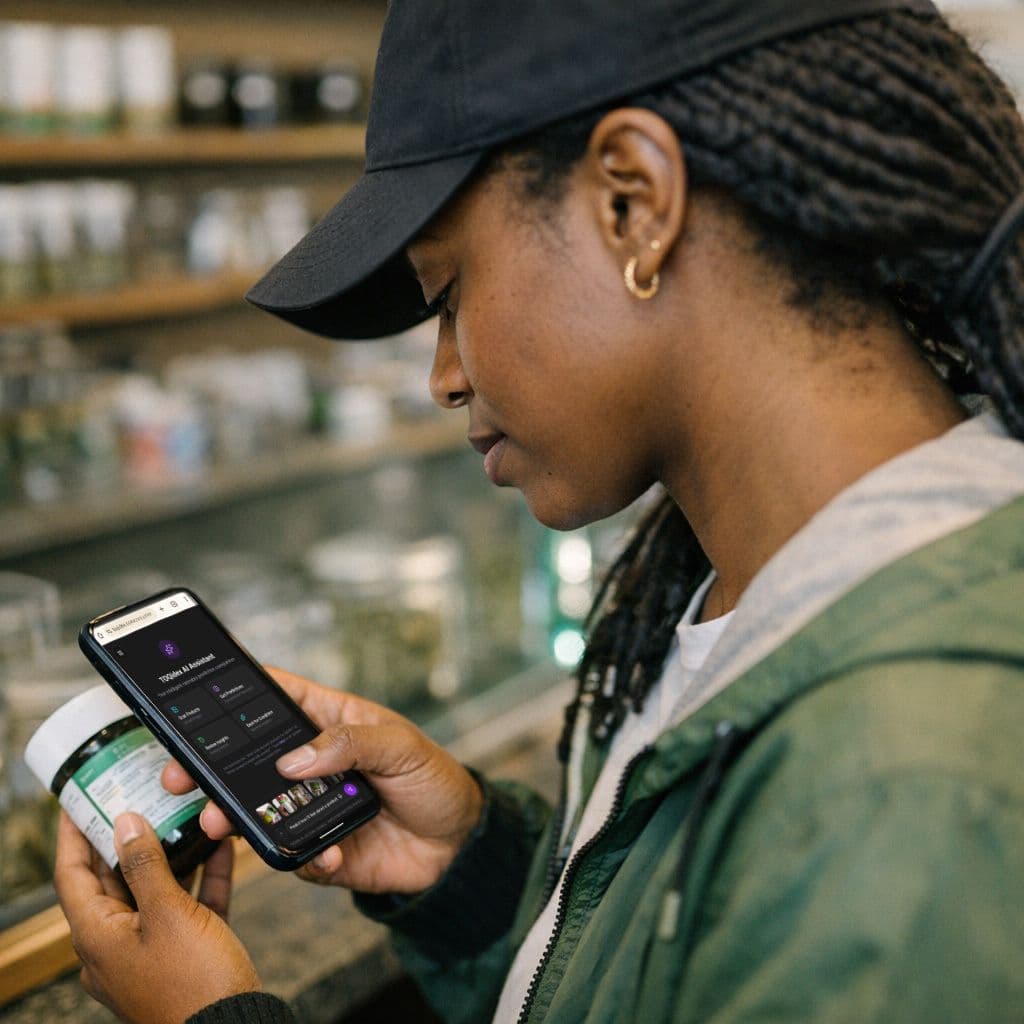
Walk into a dispensary and you will see products organized by strain name and indica/sativa/hybrid labels. This system feels intuitive. It is also, according to multiple large-scale studies, scientifically unreliable.
The Evidence Against Strain Names
Study 1: Only 4 of 30 Strains Were Consistent
Researchers at the University of Northern Colorado analyzed 122 cannabis samples from 30 strains purchased across 20 dispensaries in Colorado, Washington, and California. They found:
- Only 4 of 30 strains maintained consistent genetic profiles across all samples
- Even "clone-only" strains (which should be genetically identical) showed genetic differentiation in at least one sample
- Sativa/hybrid/indica classifications did not correspond to actual genetic groupings
Source: Schwabe & McGlaughlin, Journal of Cannabis Research, 2019
Study 2: Same Name, Different Plant
Published in Nature Plants, researchers from Dalhousie University and Wageningen University analyzed hundreds of cannabis samples and concluded:
"Pairs of strains with the same name are often just as different genetically and chemically as pairs of strains with different names."
The traditional indica/sativa labeling system was found to have no scientific validity as a predictor of chemical content.
Source: Myles et al., Nature Plants, 2021
Study 3: 89,923 Samples, No Segregation
In the largest study of its kind, published in PLOS ONE, researchers analyzed 89,923 cannabis flower samples across six US states. Their findings:
- Indica/hybrid/sativa labels showed "no obvious segregation" when mapped against actual terpene profiles
- Samples fell into three distinct chemical clusters based on terpenes, but these clusters did not correspond to commercial labels
- Consistency within strain names varied dramatically: 96% of "Purple Punch" samples fell into a single chemical cluster, but only 62.5% of "Tangie" samples did
- Algorithmic clustering by terpene profile was "significantly better at capturing the terpene diversity" than the indica/sativa/hybrid system
Source: Smith et al., PLOS ONE, 2022
Why This Happens
Cannabis strain names emerged from decades of underground cultivation with no standardized naming or verification system. Unlike regulated agriculture, there has been no central authority verifying that a plant called "Blue Dream" in one dispensary is genetically or chemically identical to "Blue Dream" in another.
Even the same genetic strain produces different chemistry depending on:
- Growing conditions (indoor vs. outdoor, soil vs. hydroponic)
- Climate and altitude
- Harvest timing
- Curing and post-harvest processing
- Storage conditions and age
What to Track Instead
The research points to one conclusion: chemical profiles are measurable and objective. Strain names are not.
TOQidex extracts the actual cannabinoid concentrations and terpene profiles from product labels. When you rate your experience, your personal model learns the relationship between measured chemistry and your outcomes. Over time, this produces predictions based on what is actually in the product, not what someone decided to call it.
The three chemical clusters identified in the 89,923-sample study were:
| Cluster | Dominant Terpenes | Typical Effect Association |
|---|---|---|
| Cluster 1 | Caryophyllene + Limonene | Mood elevation, anti-anxiety |
| Cluster 2 | Myrcene + Pinene | Relaxation, sedation |
| Cluster 3 | Terpinolene + Myrcene | Distinct, less common profile |
These clusters are based on what is chemically in the product. That is what your predictions should be based on too.
The Bottom Line
Strain names are marketing. Chemistry is data. If you have had wildly different experiences from the "same" strain at different times, chemistry is the most likely explanation. TOQidex gives you a way to track what actually matters.
To understand the specific compounds TOQidex tracks, read Cannabinoids and Terpenes Explained. To see how your experience is scored, read The 8 Coefficients of Cannabis. And to explore condition-specific tracking, visit our conditions pages.
Track Your Own Experience
TOQidex helps you build a personal evidence base by tracking your cannabis experience against real product chemistry.
Start Tracking FreeTOQidex tracks user-reported symptom response. It does not diagnose, treat, cure, or prevent any condition. All outputs reflect probability based on your personal logged data. This article is for informational purposes only and does not constitute medical advice.